Introduction
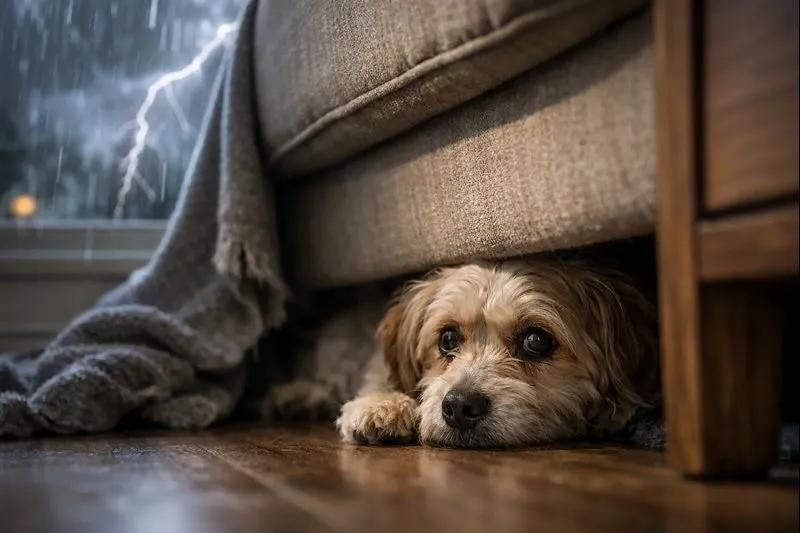
Summer brings its share of backyard fun and longer daylight hours, but it also means an uptick in thunderstorms, especially in areas like Northern Virginia. And while we might enjoy watching a summer storm roll in, dogs often feel very differently. Loud cracks of thunder, flashes of lightning, and sudden pressure changes in the air can send many pets into hiding or panic.
Storm anxiety is common, especially during the warmer months when thunder is more frequent. Some dogs tremble, bark, or try to find a way out of the house. Others may just freeze or refuse to eat. A canine behavior consultation can help us better understand why these reactions happen and what we can do to help our dogs feel safer when storms approach.
Why Thunderstorm Anxiety Affects So Many Dogs
Not all dogs react the same way during a storm, but many have strong feelings about the changes that come with bad weather. Thunder itself is scary to some, but it is not the only trigger.
• Sudden loud sounds startle dogs and might link back to an earlier scary memory
• Some dogs are sensitive to pressure drops or static in the air
• A few pets may feel anxious long before a storm hits, sensing changes before we notice them
For many dogs, this fear is not about one thing. It becomes a pattern, thunder means something uncomfortable is coming. Over time, that pattern sticks. Even on cloudy days, dogs who have had bad storm experiences might start pacing or barking.
And since every dog shows stress in its own way, it can be tricky to catch early signs until they get stronger. One pet might bark at the window, while another hides behind the couch. That is why noticing small changes in behavior during storm season is important; it is the first sign they might need more support.
What to Watch for During Storm Season
When storm clouds roll across the sky in the late afternoon or early evening, many dogs pick up on signs we might miss. In summer, when those storms become part of the weekly pattern, the stress can build up.
Here are a few signs that a dog may be reacting to storm anxiety:
• Pacing back and forth or circling the same space
• Whining, barking, or howling, especially when thunder starts
• Hiding in closets, bathtubs, or tight spaces
• Drooling or panting more than usual
• Having accidents inside the house, even if usually house-trained
Sometimes, these behaviors just seem odd for a particular dog. They might seem clingier than normal or hesitate to go outside. If we spot these patterns happening during or right before every storm, it may be time to seek extra help to break that cycle.
Without support, storm reactions usually get stronger, not weaker. If a dog reacts with fear once, they might expect the same feeling during the next thunderclap. That is why it helps to step in before small worries grow into full-blown panic.
How a Behavior Consultation Can Help
When dogs struggle with repeated storm anxiety, a canine behavior consultation gives us a closer look at the “why” behind their reactions. These appointments are not just about looking at the thunder triggers. They are about understanding the full story.
During a consultation, we might start by:
• Asking questions about past behavior, changes, and health
• Watching how a dog responds in different settings
• Looking for patterns that connect fear back to certain sounds or moments
At Mainstay Veterinary Practice, our team provides personalized canine behavior consultations and positive training solutions for anxiety triggers, offering tailored action plans to help families and pets cope with summer storms.
From there, we can begin to build a plan. That plan depends on what the dog needs most, sometimes it is more structure, sometimes it is a safer space, and other times it is a mix of many small pieces that add up to bigger comfort. The summer storm season is a smart window to do this planning because the patterns are fresh, and dogs are naturally showing their stress cues. When we address the fear now, we set up better habits before the next storm rolls through.
What Families Can Do Between Storms
Storms do not last all day, and in between, there is time to practice small habits that help dogs feel braver. We do not have to wait until the clouds roll in to offer comfort. Every little bit of calmness we add in between storms helps make future reactions less intense.
Here are some ways to support a dog between one storm and the next:
• Stick to predictable daily routines so pets feel secure
• Create a quiet area where they can retreat when things feel too loud
• Use play and calm voice cues during normal days, building trust before the next loud moment
It helps when everyone in the house handles storm stress the same way. Dogs notice when people change their routines or act differently during storms. When we stay steady, they are more likely to pick up that nothing scary is happening.
And while these routines might seem simple, they work better when used regularly. Dogs who know they are safe before the clouds come are more likely to stay calm when the thunder starts.
Helping Dogs Feel Safe All Summer
Fear does not disappear overnight, and when it is tied to something as intense as a thunderstorm, it takes some care and consistency to turn things around. But the good news is that dogs really can feel better once they understand what is happening and feel safe in their space.
Planning ahead during summer makes a difference. This is when storms are more regular, and it is easier to spot behavior patterns. Getting support early helps us tackle the problem head-on and keep it from growing into something that affects the rest of the year.
When we listen closely and help our dogs feel understood, stormy days do not have to bring worry and stress. With thoughtful changes and steady support, dogs can learn that thunder does not have to mean fear, and those loud summer evenings can pass with a little more peace and comfort for everyone.
Summer storms can be tough on dogs, but support is available. We focus on steady, compassionate steps to help your pet feel safe and at ease at home. A thoughtful starting point is a
canine behavior consultation, where we can better understand your dog’s unique needs and create a plan that works for your family. At Mainstay Veterinary Practice, we are dedicated to helping families throughout Northern Virginia make storm season more manageable. Ready to get started? Contact us today.